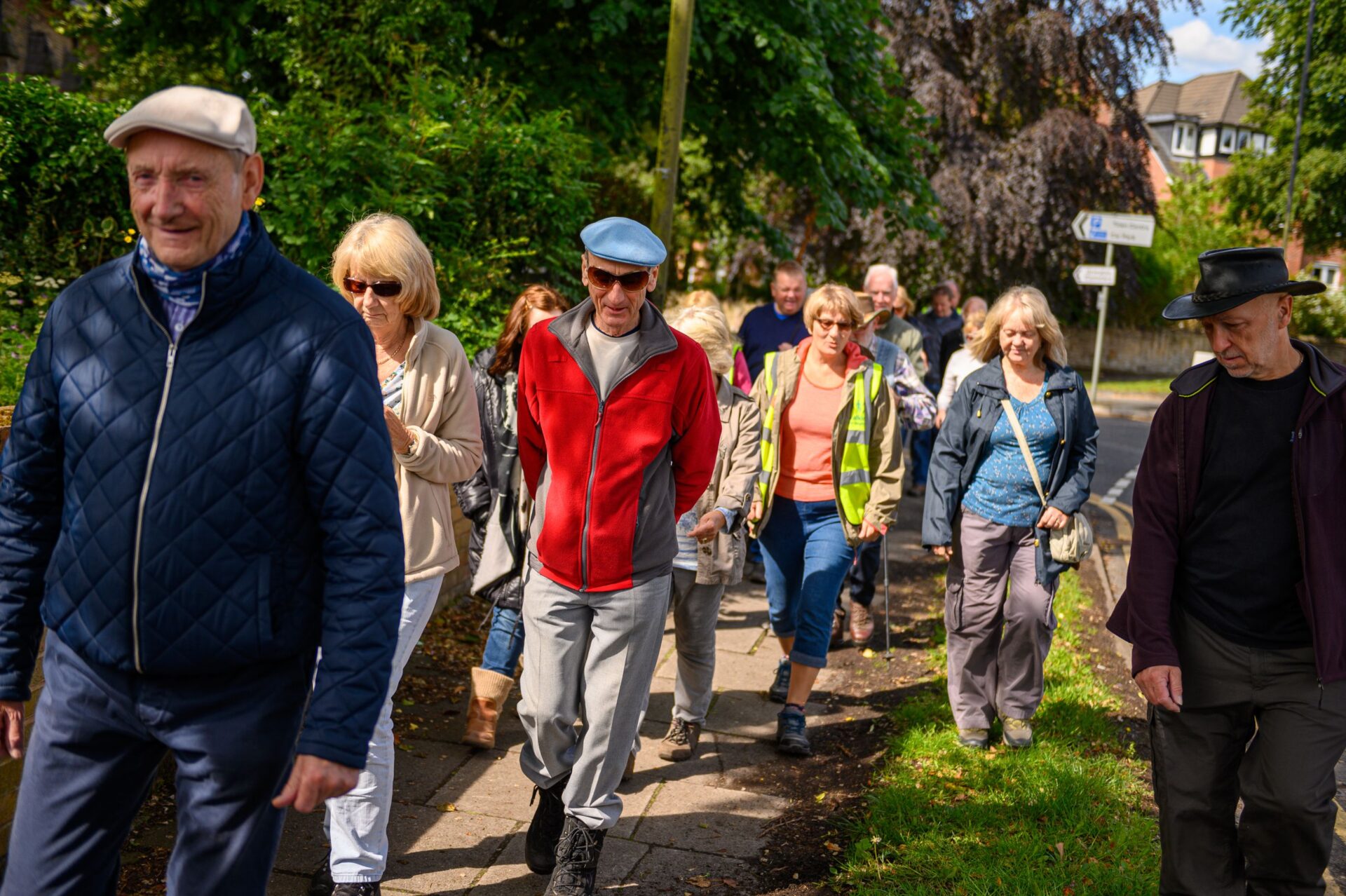
Inspiring and supporting long-term behaviour change
The GM Walking website is here to support you help your community to walk and wheel that bit more.
Whether it’s the GM Walking and Wheeling Fund, the GM Walking Festival, or other resources, we’re here to support you.
Here, our Community Walking Lead, Carole Pollard outlines some of her top tips for inspiring and supporting long-term behaviour change:
Build confidence and connection
Some people don’t walk or wheel much because they don’t know where to go in their local area.
Introduce your group members to new routes and hidden gems and they’ll become more confident to revisit them use on their own and with their families and friends outside your group.
Co-design
Involve your group members in helping you plan your walk routes and themes.
This will help create a sense of empowerment and belonging, as well as allowing you to test out exciting new ideas.
Consistency
Think about what you can do to create consistency for your group members to help them build routine and accountability, e.g. having your sessions at the same time each week, sending a text/WhatsApp reminder the night before the walk.
Emphasise the benefits
Getting outside makes us feel more energised, boosts our mood and improves our sleep.
Make sure you’re sharing all these benefits and more with your group members.
Build a community
Encourage your group members to connect with and support each other.
A friendly, supportive atmosphere will make people look forward to your walks.
Once people make friends within the group, they may make plans to meet up for walks outside the group too.
The power of goal setting
Encourage your group members to set their own personalised walking and wheeling goals to work towards.
Whether it’s being able to walk for ten minutes, or climbing Snowdon, achieving personal goals helps people to feel proud and capable.
Motivation and accountability
Start a WhatsApp/social media group where your members can share their step count, progress, photos, tips etc. and cheer each other on.
This space to engage with each other will keep walking and wheeling visible and fun and enable people to celebrate milestones together.
A bit of healthy competition!
Some groups find walking and wheeling challenges really motivating and step counting challenges often work well to keep people engaged and moving.
Daily routine
Inspire your group members with tips on how they can fit more walking and movement into their daily routine, such as walking the school run instead of driving, and catching up with friends on a walk instead of sitting down.